NMD-VCell Research Workbench
From gene evidence to a testable DMD state transition.
The scientific object is perturbation × cell state × disease context × time × phenotype. Explore evidence, freeze a study, and return every positive, null, toxic or inconclusive outcome.
No composite score or automatic winner is generated.
Three core research tasks
Move from evidence to a prospectively testable transition
Audit one gene
Search stable gene records, inspect source state, evidence level, DMD context and decision-blocking gaps.
Compare candidatesOpen a real comparison
Contrast ZNF133, MON1A and GFOD2 without generating a winner, score or therapeutic ranking.
Design the first DMD testOpen the 24-slot pilot
Freeze context, state, time, function, toxicity and replication before outcomes are available.
Bioinformatics result snapshots
Results you can read before opening the ledgers
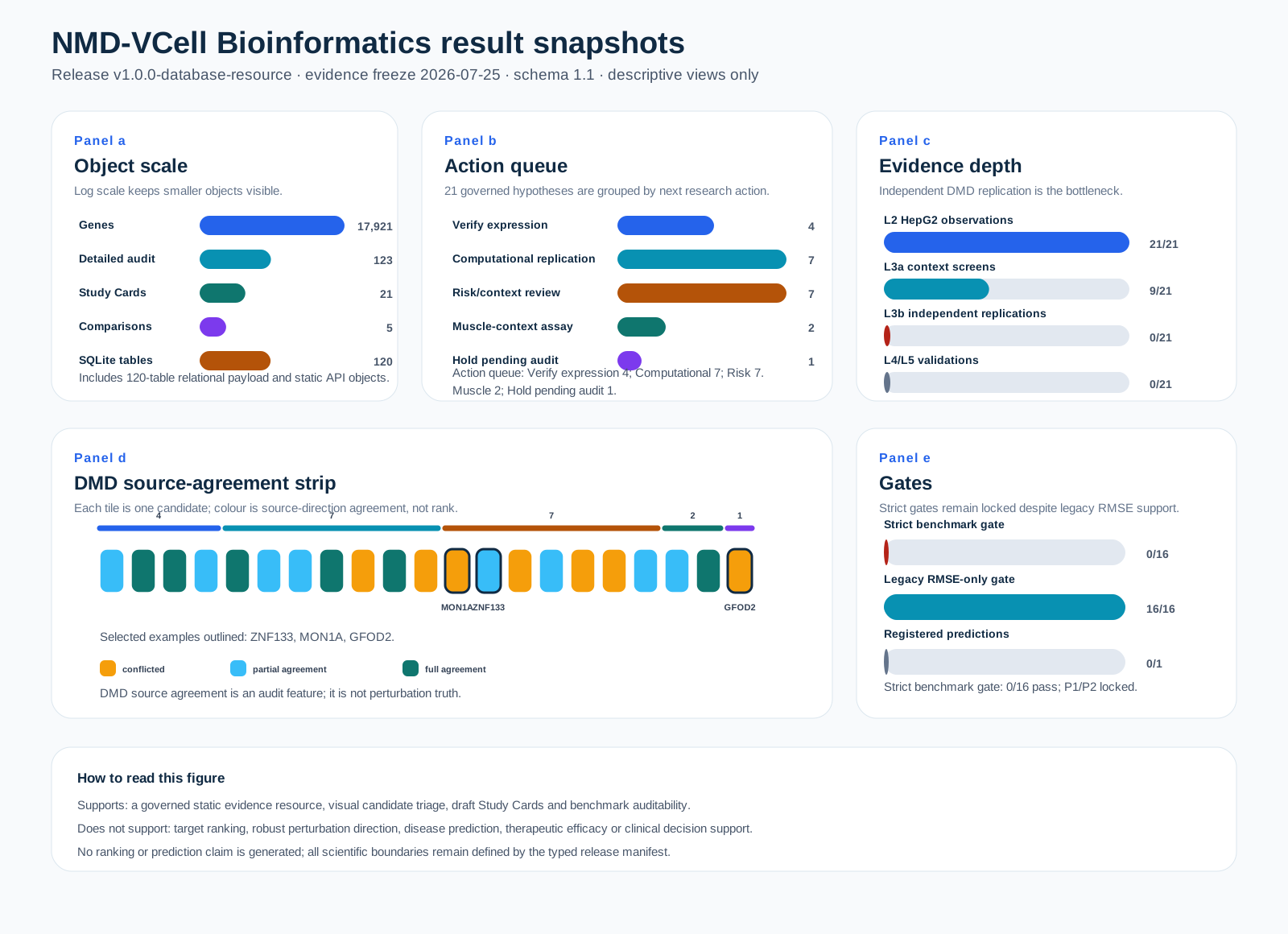
One data-driven SVG turns the frozen release objects into a visual summary: object scale, candidate action queue, evidence-depth funnel, DMD source-agreement strip and benchmark gates. It is descriptive, not a ranking or prediction claim.
Three governed objects
Program, protocol and generalization contract
Two tracks, separate gates
Competition generalization and DMD biological validity share infrastructure but never substitute for each other.
Draft protocolDMD Minimum Perturbome
Twenty-four selection slots are defined; genes, endpoint and power remain deliberately unfrozen.
Evaluation contractG0–G7 generalization ladder
Separate unseen gene, donor, state, laboratory, disease and combination tasks.
Current evidence status
The available layers and the breakpoint are explicit
21 / 21 at L2
Observed HepG2 perturbation records.
Highest assessed context9 / 21 at L3a
External context screens, not replication.
Independent replication0 / 21 at L3b
No independent DMD or muscle perturbation replication.
Strict benchmark gate0 / 16 pass
The legacy 16/16 rule is historical only.
Release and reproducibility
One build identity, checksummed objects
Every generated HTML page carries build EA-20260729-15 and a page-source digest. Release manifests, data objects and archive components remain independently checksummed.
Database release boundary
v1.0 is a database and evidence-governance release; it is not a validated disease-prediction or clinical decision-support release. DOI deposition, approved licences and maintainer metadata remain external gates.